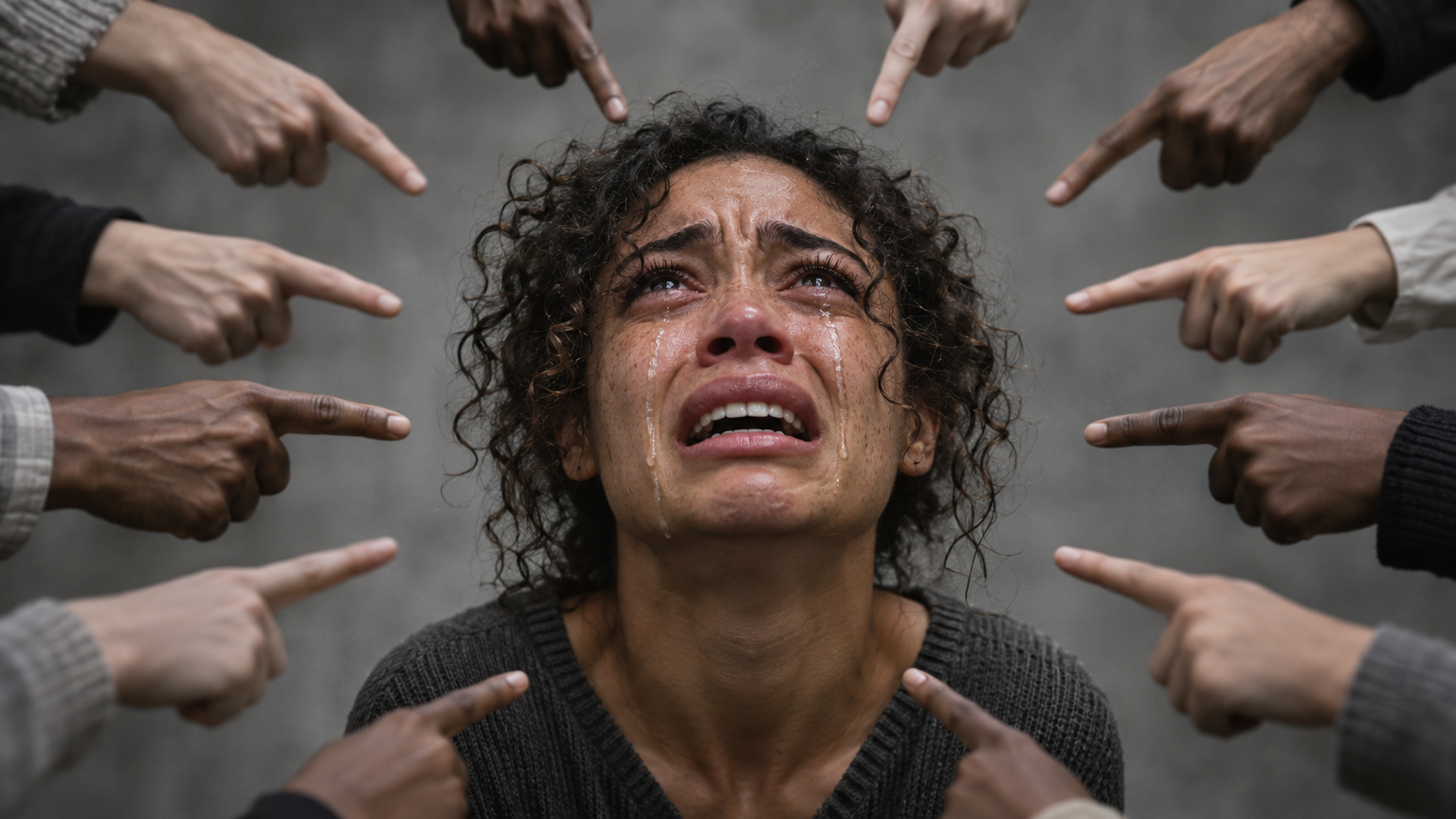
“You will blame it on anybody but you. Time to grow up, babe.” That was the entire caption I put on a Reel that went on to reach over 822,000 plays, 63,000 likes, and more than 11,000 comments. People laughed. People argued. And a lot of people felt called out — which is exactly the point.
What I wrote in the original caption
“You will blame it on anybody but you. 🤦🏾♀️ Time to grow up, babe.” Short, direct, and unmistakably me. The comments proved the shadow was definitely in the room.
Blame is not honesty — it is protection
Blame feels like honesty because it is fast. It points outward before the shame has time to settle inward. He did it. They started it. If only circumstances were different. But underneath that quick pointing finger is almost always an older protection strategy your nervous system learned when owning your part felt unsafe.
For many of us, that strategy was taught in childhood. When you grow up with trauma, emotional distance, or a home where mistakes were met with punishment or withdrawal, you learn early: do not say it was me. Hide the mess. Blame the situation. Survive. That does not make you a bad person. It makes you a person whose shadow learned to deflect so you could stay safe.
“You will blame it on anybody but you — until you are ready to own your story and change it.”
— Coach Tonya
Accountability is not self-blame
This is where people get it twisted. Accountability is not beating yourself up. It is not saying “everything is my fault.” It is the courageous, compassionate act of asking: What was my part in this pattern — and what power do I get back when I name it?
- Self-blame says: I am the problem.
- Accountability says: I participated in this pattern, and I am now choosing differently.
- Self-blame keeps you frozen in shame. Accountability moves you into choice.
- Self-blame is a shadow voice. Accountability is a boundary with yourself — and it is how firm boundaries with others begin.
How to practice owning your part without abandoning yourself
01 · Pause before you point
When the urge to blame lands, ask: What am I feeling right now — shame, fear, rejection, guilt? Name the feeling before you name the culprit.
02 · Find your 20%
Ask: What was my part, even if it is only 20%? Did I ignore a boundary, people-please, stay silent, or abandon my own needs?
03 · Speak it without self-attack
Try: “I see where I did not honor myself there, and I am learning to do better.” That sentence ends the blame cycle and starts the healing cycle.
04 · Choose one action
Accountability without action is just rumination. Choose one small, practical step that proves your new boundary is real.
In my practice, we discover, overcome, and master the shadow. Accountability lives in the middle of that arc. You discover the deflection. You overcome the shame that made deflection feel necessary. You master it by telling the truth with love — to yourself first, and then to others.
A journal prompt from this Reel
Where in your life are you currently blaming anybody but you? What would change if you owned just one percent of your part — not to punish yourself, but to free yourself? Write it honestly. Bring it to your journal, your prayer, or your coaching session.
Growing up does not mean growing hard. It means growing honest. When you stop outsourcing your power to blame, you start reclaiming it as choice. That is not just healing — that is mastery. And babe, it is time.
Join the conversation
What did this stir in you?
Share your reflections, ask a question, or encourage someone walking this path. Be kind, be honest, and speak from the heart of your healing.
Comments are loaded by Disqus when you choose to view them.
Share this reflection
Found something here for you? Share it with someone who needs it — and if you want support going deeper, coaching subscriptions are available on your terms and at your pace.
About the author

Tonya Slaton
Shadow Work Life Coach and author. Tonya helps people turn toward the parts of themselves they have hidden — with spiritual coaching and tarot, at your own pace.
Keep reading
More from the blog.
 Relationships & Healing
November 15, 2026 · 6 min read
A Toxic Man’s Worst Nightmare Is Someone Who Actually Sees You
This Reel reached over 1.8 million views because it named a truth many women feel but rarely say out loud: why are you settling for a relationship where you have to beg to be seen? Here is the deeper shadow work behind it.
Read the post Money & Abundance
November 15, 2026 · 7 min read
The Lack Mindset: How It Forms and How to Reprogram Your Money Beliefs
Lack isn’t a math problem — it’s a story learned young. Here’s how a lack mindset forms, the common and uncommon ways it takes root, and easy ways to start reprogramming your beliefs around money.
Read the post